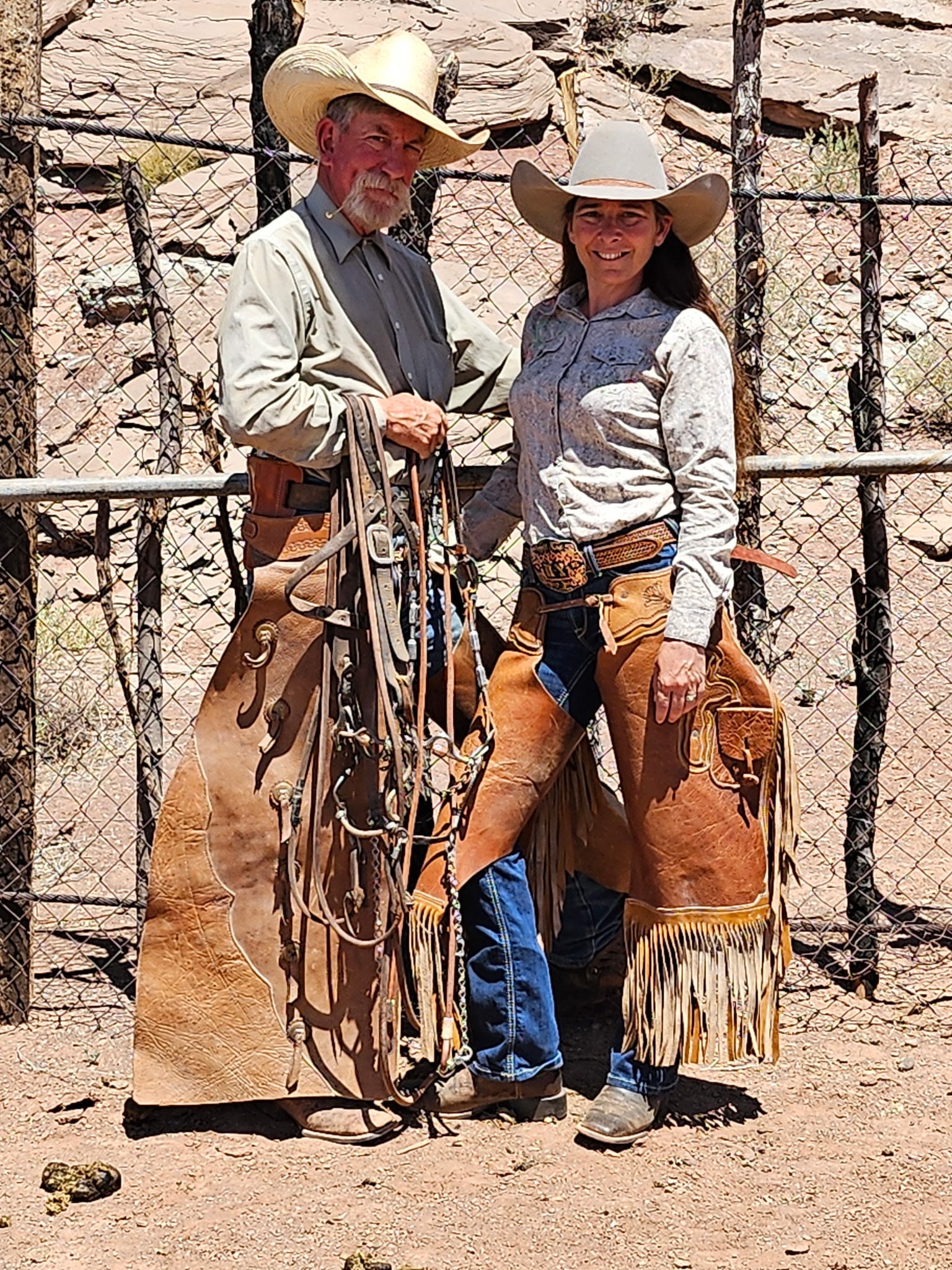
Arizona rancher fears he may lose ranch to foreign solar company
Casey Murph says Denmark-based Orsted has asked the state to transfer his ranch lease to their company for a massive solar project.
Casey Murph has warned the ranching community for years about the threat of renewable energy projects taking over Western rangeland. Now, he may be big solar’s latest victim.
A foreign green energy corporation has moved to evict cattle from several sections of land on Murph’s Arizona state allotment.
“The project would take out most of my best winter range and leave me with basically a playa,”
Murph says. “It would effectively stop me from being able to run enough cows to ranch sustainably.”
As of publication, the Arizona State Land Department did not provide a comment on the status of the solar application.
Danish energy company taking American land out from under ranchers?
Murph says he was contacted by Orsted, a green energy company based in Denmark, about getting access for surveyors through his locked gates to a project north of his private land. During the discussion, he realized the project to be sited covered several sections of land within the perimeter of Murph’s state allotment. The allotment is still under Murph’s mother’s name; he believes Orsted did not realize they were speaking with the owner.
In his conversation with Orsted reps, Murph got the impression they were confident the project will be approved. Whether or not that is true remains to be seen.
Orsted did not respond to a request for comment.


Public sides with Murph
Murph let the public know about the threat on his X account.
“If it happens, there will be no winter pasture left, and our operation will be done after five generations,” Murph wrote. “Folks should know, things like this have directly contributed to the high cost of retail beef in stores.”
His post quickly gathered steam, raising attention from working land advocates like John Rich and Braxton McCoy, and Arizona Congressman Eli Crane.
“I have a big fight ahead of me, but because people on X helped get the word out, it may actually be a fight, not just some anonymous ranching family of modest means getting steamrolled by an international ‘green’ energy conglomerate, and a state land administrative complex that has lost touch with its foundation,” Murph says.
He says county administrators must approve renewable projects before they’re built, but that won’t be a safeguard for him—administrators in Navajo County tend to approve renewable projects despite widespread public opposition.
Green energy projects erasing working landscapes
In 2021, the state of Arizona reached out to let Murph know that a solar utility company had asked to have some of his state leases transferred over to their use for a solar complex.
“I started doing research online and I found out it takes a huge amount of land to make a dent with solar power,” Murph said. “It takes about 300 acres of land to provide enough power to supply about 5,000 people,” Murph said. “I did the math. That means a city like the Phoenix metro area is going to need like 500 square miles of land. And for some reason, they have targeted my part of northern Arizona for a lot of this.”
He believes it is “incredibly destructive” to “tear up that much productive land and wildlife habitat” for such an inefficient power source.


Since then, Murph has consistently received notifications about renewable companies applying for his state sections. So far, the state has denied them.
“I thought I might dodge the bullet,” Murph says, “But it keeps coming back like cancer.”
Although Murph just renewed his grazing lease for another 10 years, the state of Arizona allows state lands to be transferred for renewable projects. It’s rare; generally the state tries to direct wind and solar projects to land where there won’t be conflicts. There are hundreds of thousands of acres of state land that are of poor quality for grazing, and have no grazing leases on them.
But a few miles from Murph’s ranch, the DeSpain family was recently evicted from a state grazing allotment for a renewable energy project. They sued to try and stop the eviction, but lost in court.
“It’s hard when you’re on lease country,” Rusty DeSpain told the Daily Caller last year. “You treat it like your own for years, you’re proud of it, you treat it like your backyard and then they just come in and take it out from underneath you overnight. It’s devastating.”
The DeSpains ranched the land since 1904. They were booted for the Hashknife solar installation. The family was forced to sign a nondisclosure agreement and can’t speak about what happened to them, but neighbors say their operation has shrunk to just a few cows.
Green energy is taking millions of acres of farmland out of production
Between corn grown for ethanol and massive wind and solar projects spreading across America’s farmland and rangeland, the green energy industry has taken millions of acres of arable working landscapes out of production.
Many of these companies are owned by foreign powers.
In May 2025, Murph spoke on the UNWON podcast about green energy encroachment on rangeland.
“It’s one attack after another,” he said. “It started out that the cattle are going to destroy desert tortoises. And now they’re just smashing desert tortoises to build solar farms on the same land they kicked that rancher off of. What else can we conclude other than they just feel threatened by us somehow and they just want our culture gone?”


Shout out to my ranching neighbor, Rob. He won't take the solar money, even though the $ amount would be astronomical if he would. Doesn't want good wheatland taken out of production - he wants to feed people.
People need to know what is happening to American Ranchers and Farmers and public lands they have grazed for multiple generations!