BREAKING: Feds intervene to halt Potter Valley dam removal
Agriculture Secretary Brooke Rollins has asked FERC to reject removal of Scott and Cape Horn Dams.
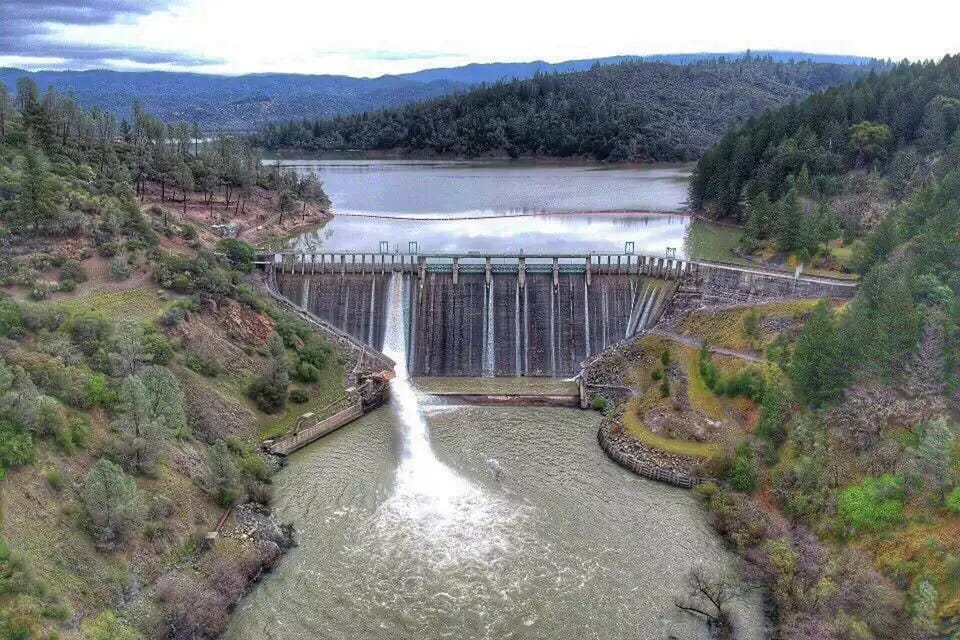
Today, the Trump administration acted to stop the removal of the Potter Valley Project—two hydroelectric dams at the heart of a water system that supplies more than 600,000 residents in an agricultural and rural region of Northern California.
In a motion to intervene, the U.S. Department of Agriculture (USDA) said it seeks party status in Federal Energy Regulatory Commission (FERC) proceedings to represent agricultural and rural interests.
“The Department wishes to become a party to this proceeding to ensure that the interests of the FS, local farmers, ranchers, agricultural producers, communities, and other Department equities are represented.”
The USDA also moved to intervene in dam owner Pacific Gas & Electric’s (PG&E) efforts to secure FERC permission to cut water deliveries to Potter Valley farmers, and filed formal comments opposing dam removal.
“If this plan goes through as proposed, it will devastate hundreds of family farms and wipe out more than a century of agricultural tradition in Potter Valley,” said USDA Secretary Brooke Rollins. “Water is the lifeblood of farming. Without it, crops fail, businesses close, and rural communities crumble.”

Rollins claims political considerations rather than water reliability and community needs are driving the push for dam removal.
“For generations, farmers here have put this water to good, productive use,” she said. “But under California’s radical leadership, the needs of hardworking families are being ignored while the needs of fish are treated as more important. That’s simply wrong. This plan would put countless USDA investments at risk and leave families even more vulnerable to drought and wildfire. This is why I’m intervening in the FERC proceedings and urging them to reject the pending application.”
Copies of the USDA’s intervention filings are available below.
The Department of the Interior (DOI) also filed to intervene in November. Regional Environmental Officer Viktoriya Sirova cited numerous laws in the DOI’s request to become a party in the decommissioning process, including the Endangered Species Act, the Federal Land Management and Policy Act, and the Reclamation Act, as well as federal responsibility to impacted tribal lands.
USDA wants dams to stay; cites agricultural, firefighting, and federal land impacts
The USDA said dam removal would affect U.S. Forest Service (USFS) lands surrounding the project and could disrupt multiple USDA programs, including the Farm Service Agency, Rural Development, and the Natural Resources Conservation Service.
“It is abundantly clear that PG&E’s application fails to consider appropriately the elimination of water supply to local communities without viable alternatives; the negative impact that removal will have on downstream communities and agricultural producers; and the diminished capacity for wildland firefighting in one of the most fire-prone regions of the country,” said USDA senior advisor Tucker Stewart in written comments submitted to FERC. Read the agency’s full comments opposing dam removal here.
Two of the three largest fires in California state history started near Potter Valley. Both were put out with water from the Potter Valley project.
In September, more than 920 residents signed an open letter to Trump administration officials seeking federal intervention to halt removal of the 100 year-old Potter Valley Project, arguing the infrastructure supports water deliveries and fire management across five Northern California counties.
Rollins responded concurring with the community’s concerns. She also wrote a local op-ed outlining her opposition to dam removal.
Elected officials defend dam removal
Dam removal advocates argue the project is no longer economically viable and tearing it down would benefit fish.
Rep. Jared Huffman (D-California), a former environmental attorney who represents much of the district impacted by this water, has long advocated for dam removal.
In a September interview with Lost Coast Outpost, Huffman defended PG&E’s proposal.
“The reason PG&E is seeking to decommission the Potter Valley Project is because it is non-economic and investing in dam upgrades [would] only add to the cost of operating it and would not make the project economic,” Huffman said.
In an email reviewed by UNWON, Huffman’s office said PG&E ratepayers will foot the cost of dam removal, not PG&E.
Public estimates for dam removal have put the total at around $500 million. According to a source at PG&E who asked to remain anonymous, the true cost for decommissioning is at least $1 billion—and upwards of $2 billion if dam removal is delayed by five years.

As an energy monopoly, PG&E is regulated by the government. Members of the California Public Utilities Commission (CPUC), the official body that regulates PG&E, are appointed by Governor Gavin Newsom. PG&E is also a major political donor—at one point Newsom’s second-highest backer.
In a 2024 interview, Newsom took credit for dam removals in Potter Valley, calling them part of his salmon restoration strategy.
Agriculture and policy groups file FERC comments
Other groups who filed comments opposing dam removal include the America First Policy Institute (AFPI), a D.C.-based think tank founded by Rollins.
“PG&E’s application to surrender and decommission the Potter Valley Project fails to provide a long-term water security solution or the comprehensive public-interest review required under Section 6 of the Federal Power Act (16 U.S.C. § 791a et seq., license surrender regulations at 18 C.F.R. pt. 6(2024)),” said T.J. Wilson, deputy director of rural policy at AFPI. “Without the existing dams and diversions, water supplies will decrease beyond any level of reasonable viability, thus threatening the very existence of people in the area.”


Several local farm bureaus filed comments expressing concerns over dam removal as well, including those in Sonoma County and Humboldt County.
“The Eel River is ecologically and culturally significant—but so are the families, farms, fishing fleet, forestlands, and communities that rely on it every day,” said Humboldt County Farm Bureau Executive Director Jeannie Fulton. She said fish are being considered, but not agriculture. “Dam removal should not come at the cost of those who have sustainably stewarded the land and its water for generations.”
Democrat and Republican congressional representatives oppose dam removal
Two local congressmen from opposing parties also filed comments. Rep. Mike Thompson, a Democrat, represents Lake County where Scott Dam is located.
“As currently drafted, the application fails to adequately address the serious and well-documented concerns raised by federal, state, local, Tribal, and community stakeholders throughout Northern California,” said Thompson. He urged FERC to require PG&E to “substantially supplement” its surrender plans with more analyses and “enforceable commitments.”
Rep. Doug LaMalfa, a Republican, cites the Klamath Dam removals in his district among his reasons for opposing decommissioning.
“The removal of these dams lowered local and regional groundwater tables, caused massive land shifts and collapses around the emptied reservoirs, created wide mudflats in the former reservoirs susceptible to noxious and invasive vegetation growth where wildlife has also become stuck and died, deposited hundreds of thousands of tons of muddy sediment and debris downstream on the Klamath River destroying riparian habitat, and resulted in a massive young salmon die-off,” said LaMalfa. “I fear the exact same thing will happen if Scott Dam and Cape Horn Dam are removed.”
Read More:
Rollins meets with Potter Valley farmers and ranchers, vows to fight for their water
Agriculture Secretary Brooke Rollins recently met with about a half dozen stakeholders local to the Potter Valley Project, a hydroelectric plant in Northern California slated for removal. To support independent journ…
Dam removals devastated the Klamath. Will agriculture take the fall?
I am a rancher in Siskiyou County, California, home to three of the four hydroelectric dams that were recently destroyed on the Klamath River. I’m also a freelance journalist who has written about prospective Klamath Dam removal for 10 years.
Letter from Russian and Eel River communities asks federal agencies to review "devastating" environmental impact of Potter Valley dam removals
More than 900 community leaders, tribal members, farmers, ranchers, firefighters, and residents of the Russian and Eel River communities…
“This shuts us down:" Potter Valley ranchers say PG&E cut water without warning amid dam removal fight
Water cutoff hits rural town in the middle of harvest and fire season


Incredible job reporting this story. What an impact to this community and those in the watershed
PG&E should not be allowed to give $$ to any political party! Much less Gavin Newsom! The whole system is a scam.