


The FFA Motto was adopted by voting delegates at the 1952 National FFA Convention in Kansas City, Missouri. Once referred to as the largest student organization in the world, the association now boasts more than one million members.
FFA’s mission statement is clear and concise: FFA makes a positive difference in the lives of students by developing their potential for premier leadership, personal growth, and career success through agricultural education.
I remember the inspiration that came over me in Kansas City in 1990 when I listened to National FFA President Donnell Brown deliver his final address, “Keeping the Dream Alive.” His words flooded me with emotion and lit a fire in me that would eventually help pay my way through college.
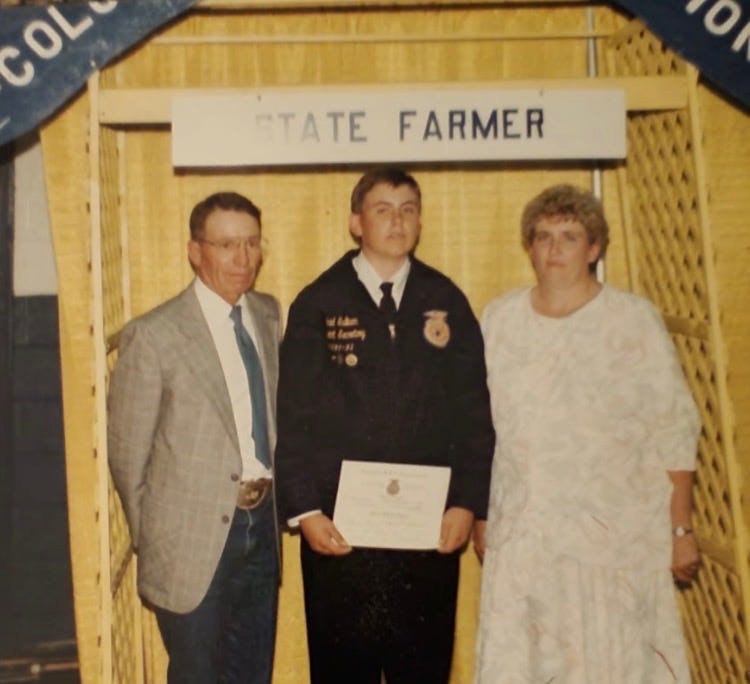
A few years later, I stood on the stage in Fruita, Colorado, as one of two finalists for the Star State Farmer award at the state FFA convention. It was the culmination of an FFA career that included chapter and district officer positions, Star Chapter and Star District Farmer honors, recognition as the high-point gold individual in the state horse judging contest, and earning my State FFA Degree.
FFA set the course for the rest of my life.
The mission that shaped my life
The 1952 convention helped solidify the organization’s direction, and in 1995, the national delegation recommitted to the FFA Code of Ethics, reinforcing principles that were intended to guide future generations of members.
In recent years however, the National FFA Organization has faced growing criticism from former members, advisors, and supporters who believe the organization has drifted from its original mission and values.
Most recently, the “Friends of the Rising Sun” social media platform has advocated for what it describes as a return to FFA’s historic policy roots. The group has also rallied support for ending policies that prohibit prayer and invocation at FFA meetings and events.
Former national FFA officer Kevin Ochsner recently wrote on Facebook: “This is one of the reasons I’ve been so disgruntled with the direction of the National FFA.”
Questions about Chinese influence and DEI
In February 2026, members of the House Ways and Means Committee, along with the Congressional FFA Caucus, sent a letter to FFA CEO Scott Stump questioning whether certain activities were consistent with the organization’s tax-exempt status. The letter also raised concerns about FFA’s relationship with Syngenta, a company owned by Syngenta Group, whose parent company is connected to Sinochem Holdings, a Chinese state-owned enterprise. The letter referenced the U.S. government’s prior designation of Sinochem as a “Communist Chinese Military Company” and cited Executive Order 13959, issued in 2020, concerning securities investments connected to entities designated under that policy.
Additional concerns surfaced after Syngenta was selected in 2022 as a primary implementer in the latest National FFA strategic plan, which included initiatives related to diversity, equity, and inclusion. The initiative is now referred to as the “Belonging, Engagement and Safety Committee.” Critics argue that these efforts have placed pressure on members, officers, and guest speakers to support or promote DEI-related activities within the organization.
In his response to Congress, Stump stated that the National FFA Organization does not implement or operate a political or ideological agenda. He also acknowledged that proposed DEI protocols had been discussed but said they were never enforced.
Regarding concerns about the relationship between National FFA and Syngenta, Stump stated, “As with all corporate supporters of the National FFA Foundation, Syngenta North America’s role has been limited to providing financial support aligned with agricultural education and youth leadership development, without directing or influencing FFA governance, programming, or curriculum.”
Still, questions surrounding Syngenta’s corporate ownership and its connections to Chinese state-owned enterprises continue to fuel debate about nonprofit governance, corporate relationships, and the potential influence of outside organizations.
Former members say FFA has changed
In 2020, the National FFA Organization removed Western Region Vice President Lyle Logemann from office over what the organization described as “insensitive” social media posts made years before his selection as a national officer. FFA said Logemann’s comments violated its Code of Ethics, particularly its commitment to “appreciate and promote diversity in our organization.”
The decision was subsequently cited by some former members and supporters as evidence of a changing approach to diversity, equity, and inclusion within the organization.
During the 2021 National FFA Convention, the organization also reported two incidents on stage that it described as racially motivated. The incidents prompted internal investigations and further debate over the organization’s DEI policies and messaging. The resulting inquiry did not make a determination regarding the allegations.
Shift started under Poeschl, continues with Stump
Many believe the organization’s shift did not begin solely under current CEO Scott Stump, but during the leadership of former CEO Mark Poeschl, who served from 2016 to 2021. During Poeschl’s tenure, critics contend that FFA increasingly embraced DEI initiatives while moving away from what they regarded as its historical mission and values.
During Poeschl’s tenure, FFA also worked with Congress to modernize its federal charter. FFA described the changes as an effort to modernize its governance structure and provide greater flexibility for the organization. Critics subsequently argued that the changes created greater latitude for initiatives they viewed as outside FFA’s traditional mission.
The organization also formed partnerships with advocacy groups such as the Cultivating Change Foundation, which describes its mission as “driving change in food and agriculture.” These relationships further contributed to concerns among some former members about the direction and priorities of the organization.
After Poeschl’s departure, some former members felt a course correction was imminent. Instead, many believe the same basic frameworks remain in place, even when the terminology and branding have changed.
Why more than 100 former FFA officers are speaking out
The direction of the National FFA Organization has not gone unnoticed. Former members, national officers, and advisors have increasingly spoken out publicly, calling for a renewed focus on the organization’s original mission. More than 100 former national FFA officers have formed a coalition opposing the organization’s current direction and raising concerns about growing ideological influence.
In a letter to Stump, the group wrote: “We respectfully urge you to reconsider this direction, which is grossly out of scope, and refocus on FFA…without ideological frameworks.”
These concerns also connect to a subject I address in my national presentation, The War on Beef: The Growing Influence of ESG and Other Institutional Frameworks on Agriculture and American Institutions.


My concern is not simply that these frameworks exist. My concern is that organizations such as FFA can lose sight of their original purpose when outside priorities begin competing with their core mission.
FFA was never simply another student organization to me. It was an organization that challenged me, developed me, gave me opportunities and ultimately helped shape the person I became.
I credit FFA as one of the driving forces in my life. It literally changed me and laid the foundation for my purpose and many of my personal successes. It instilled courage, confidence, and clarity in me.
FFA’s motto still stands: Learning to Do. Doing to Learn. Earning to Live. Living to Serve. And for me, they are still worth KEEPING THE DREAM ALIVE.
Read More
National FFA convention again bars Christian group from hosting booth

On Monday, Scott Stump, CEO of National FFA, affirmed his organization’s decision to ban a Christian group from holding a booth at this year’s National FFA Convention in Indi…
Farmers say Texas FFA is pushing faith out of the organization

For almost 20 years, students attending the Texas FFA Convention in Fort Worth have stopped by the Fellowship of Christian Farmers International (FCFI) booth. Volunteers pass out beaded …

Where the heck does DIE (diversity, inclusion, equity) fit in with growing America's food sustainably, humanely, and ethically, while strengthening farming and ranching families and their commitment to the land.
By the way, Don't stop where they want you to stop.
Say and write DIE and never DEI.
"Dei" means the Lord God in Latin and is used purposefully by these creatures with nasty, Blasphemous intention. The order of the words does not matter to them.
The acronym IS EVERYTHING.
Winning is always in the details.
WTFU