Rollins Just Ordered Major Reforms to How the Forest Service Treats Ranchers, a Year After the Maude Case
"Ranchers are the solution, not the problem," the Ag Secretary said.

Today, Secretary of Agriculture Brooke Rollins directed the Forest Service to change how it interacts with ranchers. She made it clear: Grazing on public land is a priority for the Trump Administration.
“America’s ranchers are an integral component of our rural economies, our food security, and our national strength,” she said. “For too long, bureaucratic overreach and activist-driven lawfare have undermined the multiple-use mandate of our National Forests and Grasslands. Today, we are empowering line officers with clear direction and reaffirming grazing as an essential tool for healthy landscapes and vibrant rural communities.”
This directive comes just over a year after Rollins stood on the steps of USDA headquarters in Washington, D.C. and announced charges had been dropped against the Maude family—charges brought under the Biden-era Forest Service. As reported by UNWON, their case saw a 25-acre boundary line question on the Buffalo Gap National Grasslands escalated into a felony theft-of-federal-property indictment. Charles and Heather Maude, longtime South Dakota ranchers and parents of two young children, faced a collective 20 years in prison and $500,000 in fines because of a fence built by their ancestors.

It was extraordinary by any measure: A sitting cabinet secretary personally stepping in to end the prosecution of a small ranching family. Rollins did it within the administration’s first 100 days. It was her first press conference as Ag Secretary. Flanked by the Maude family, lawmakers from South Dakota and Wyoming, and dignitaries like Homeland Security Secretary Kristi Noem, she compared what Charles and Heather endured to the persecutions that drove the American Revolution. It would set the tone of her tenure, remarkable for its dogged focus on bringing voice to the nation’s small, independent farmers and ranchers. Her message was clear: The federal government had been weaponized against the people who feed the nation. That era was over.
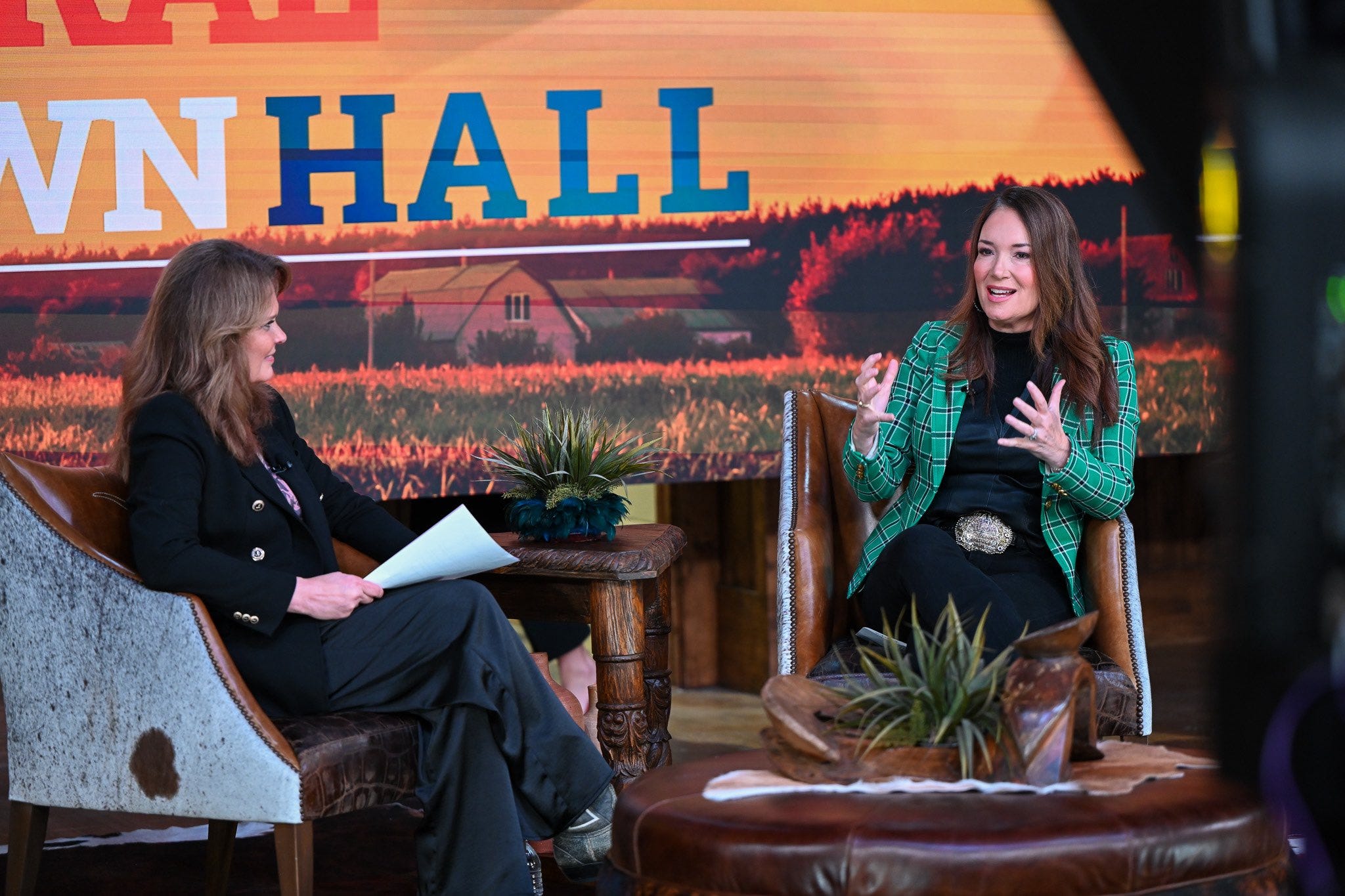
Friday’s memo is the next chapter in this project. Without naming the Maudes, Rollins’ directive—which she announced today at the RFD-TV Rural Town Hall—targets the system that allowed their ordeal to happen. She lists prioritizing permits for vacant and closed allotments, maximizing grazing flexibilities, streamlining permit and allotment authorizations, improving communication with permittees, and ensuring ranchers have a stronger voice in federal land management decisions.
“No more activist lawfare and bureaucratic delays locking up allotments,” Rollins said. “Ranchers are the solution, not the problem.”
The directive orders implementation down to the field-office level, requiring Forest Service employees to process permits more efficiently, reopen unused allotments, and work directly with producers to remove unnecessary obstacles.
It’s a step toward fixing a system that nearly cost the Maudes everything. Survey results were never shared with the couple, and even after charges were dropped, the underlying allotment issue stayed unresolved for months before finally reaching a resolution. As Heather Maude told UNWON in November, there was no communication; her family was treated as guilty until proven innocent.
“If there is an issue, the renewal of the grazing permit is a time in which the Forest Service can state, 'This is an issue, or a fence we would like to address.' That never happened,” she said. “We were never given any documentation stating we had done anything wrong, stating there was an actual issue. There was no comment made on our grazing permit.”

From poor communication with permittees to failure of transparency to lack of a responsive local channel, Rollins’ directive seeks to address the structural failures the Maudes’ story exposed.
“The biggest thing I am looking for is assurance that I can continue what we've done for 115 years from this point forward, without fear of facing this again,” Maude told UNWON last November.
For years, ranchers could expect no such assurance from Washington.
Rollins’ declaration builds on the Memorandum of Understanding (MOU) she signed in March with Secretary of the Interior Doug Burgum, which formalized a collaboration between the USDA’s Forest Service and the Department of Interior’s Bureau of Land Management (BLM), ensuring more efficient, transparent, and responsive grazing management on federal land. This MOU was the implementation vehicle for Rollins’ Grazing Action Plan released in October 2025 in response to historic contraction of the U.S. cattle herd, designed to expand beef supplies and bolster the ranching industry.
Together, the BLM and Forest Service oversee 240 million acres of federal rangeland and administer over 23,000 grazing permits across roughly 29,000 allotments in 28 states. About 10% of those allotments, roughly 24 million acres, sit unpermitted. The federal government is now ordering federal agencies to prioritize those vacant allotments for grazing permits.
Environmental groups, predictably, oppose the shift in policy. In April, the Center for Biological Diversity filed a 60-day notice of intent to sue USDA and Interior, arguing that reopening these grazing allotments without fresh environmental reviews violates the Endangered Species Act and turns “shared wilderness into discount feedlots.” The Western Watersheds Project called the MOU’s programs to train federal staff on ranch partnerships, “cultural indoctrination.”
The dispute falls along old battle lines. The divide between Washington and the West that turned the Maudes’ fence into a federal case still separates those who see ranchers as stewards of public land and essential partners in fulfilling its multiuse mandate, and those who view them as a threat. For agricultural families like the Maudes, it’s an existential question.