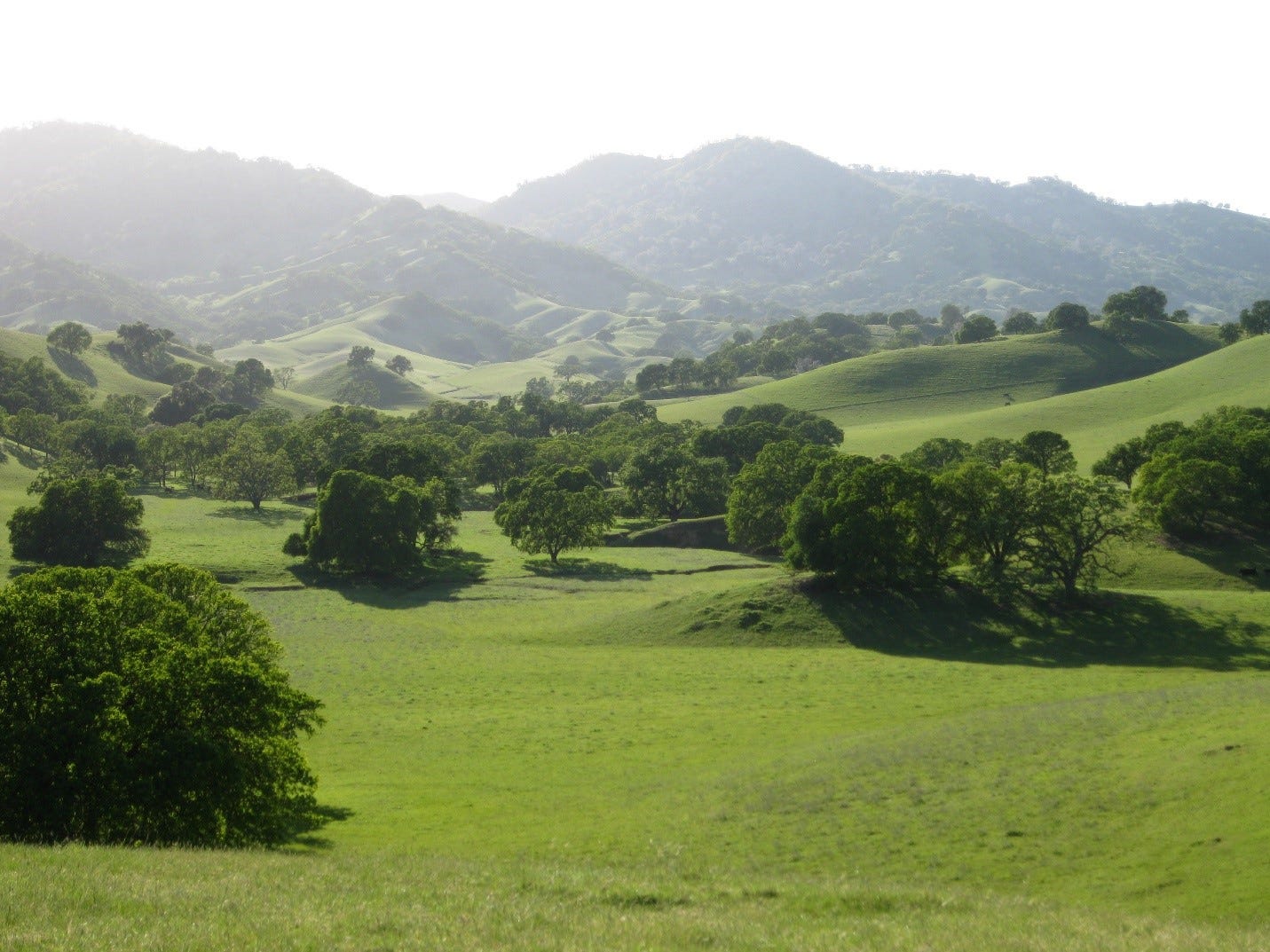
Rominger Brothers Farms: Balancing crops and rangeland
“We can’t keep putting land into production forever. Eventually, there will be no wild lands left.”
ROMINGER BROTHERS FARMS MODEL STEWARDSHIP AND SUSTAINABILITY
Most Americans are disconnected from the journey their food takes from field to plate. Few consider the hands involved along the way. Recent popular documentaries on food production in the U.S. such as What the Health? and The Game Changers seek to open up that conversation by perpetuating the worn myth that American food production is corporate and impersonal. Rominger Brothers Farms proves otherwise.
The Romingers have always been a big picture family. Father Rich served six years as Director of the California Department of Food & Agriculture in Sacramento, and eight years in Washington, D.C. as Deputy Secretary of Agriculture at the USDA. Although the work took him away from the farm, he was supported by his wife Evelyne, herself the daughter of a dairy family. She always encouraged her four children to “think globally, act locally.”
For son Bruce, a career in agriculture was never a given. It wasn’t until he found a book in his college bookstore at the University of California, Davis that his perspective changed.
In the 1955 classic Topsoil and Civilization, now out of print, authors Vernon Gill Carter and Tom Dale argue that all the great civilizations of the ancient world were built around rich soil. When agriculture was neglected, these civilizations began to decline and eventually collapse. In every failed society, the first object of neglect is its soil.

Today, Bruce and his brother Rick run Rominger Brother Farms in Yolo County, California. They run a diversified operation, with rangeland leased for cattle and sheep patchworked beside rich farmland producing tomatoes, rice, sunflowers, corn, wheat, almonds, walnuts, wine grapes, alfalfa, and more.
A few years back, the farm was almost divided when a few second cousins decided to part with their share. Bruce searched for a way to keep the property intact and found California Rangeland Trust.
“I like the idea of being involved with a land trust that has a bunch of ranchers on the board,” he says. “Well-meaning people who aren’t from agriculture don’t understand it when it gets down to the nitty-gritty details.”
As farmland moves into the hills and mountains around them, Bruce is concerned about the impact on California’s ecosystem.
“We can’t keep putting land into production forever,” he says. “Eventually, there will be no wild lands left.”
Putting land in grazing is protective. Animals give back to the soil, and unworked grassland serves wildlife, water, and air.
“When we have an opportunity—especially near an urban area like this—to preserve some of that and to say, ‘OK, this is never going to be converted, this is going to stay grazing land forever and a place for wildlife,’ I think it’s something we ought to consider.”
Producers like the Romingers make up the landscape of food production in the United States. It’s a part of the picture more Americans should see. They are a hardworking, educated, and passionate family, and they care about every aspect of their land. They view their role as stewards and providers.
The Romingers are committed to conserving grazing land in Yolo County forever, protecting its vanishing wildlife corridor, and offsetting the negative effects of urban development in the region. Bruce is a farmer who cares about the health of the hills in his stewardship.
A version of this feature was originally written for the California Rangeland Trust.


Having grown up on a farm that rotated crops, had dairy operations as well as eggs, stories like this give me hope for future generations. Big agri-farming in many ways is diminishing the soils values and eventually decreases over-all production.