


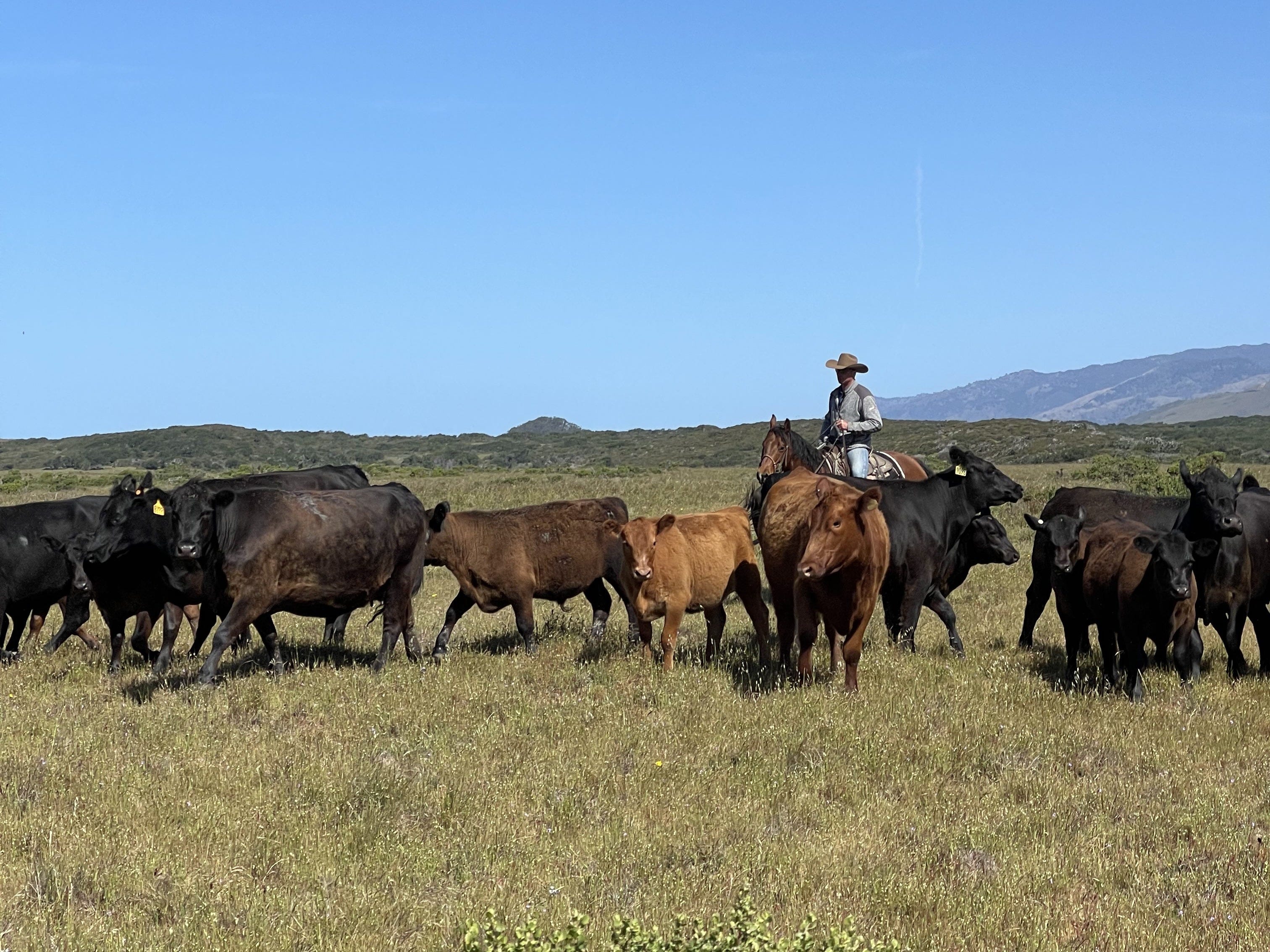
Following President Trump’s decision to import up to 300,000 metric tons of foreign beef without tariffs to lower consumer prices—which drew fire from ranchers—he announced Friday that he wants to make it easier for ranchers to process their own meat.
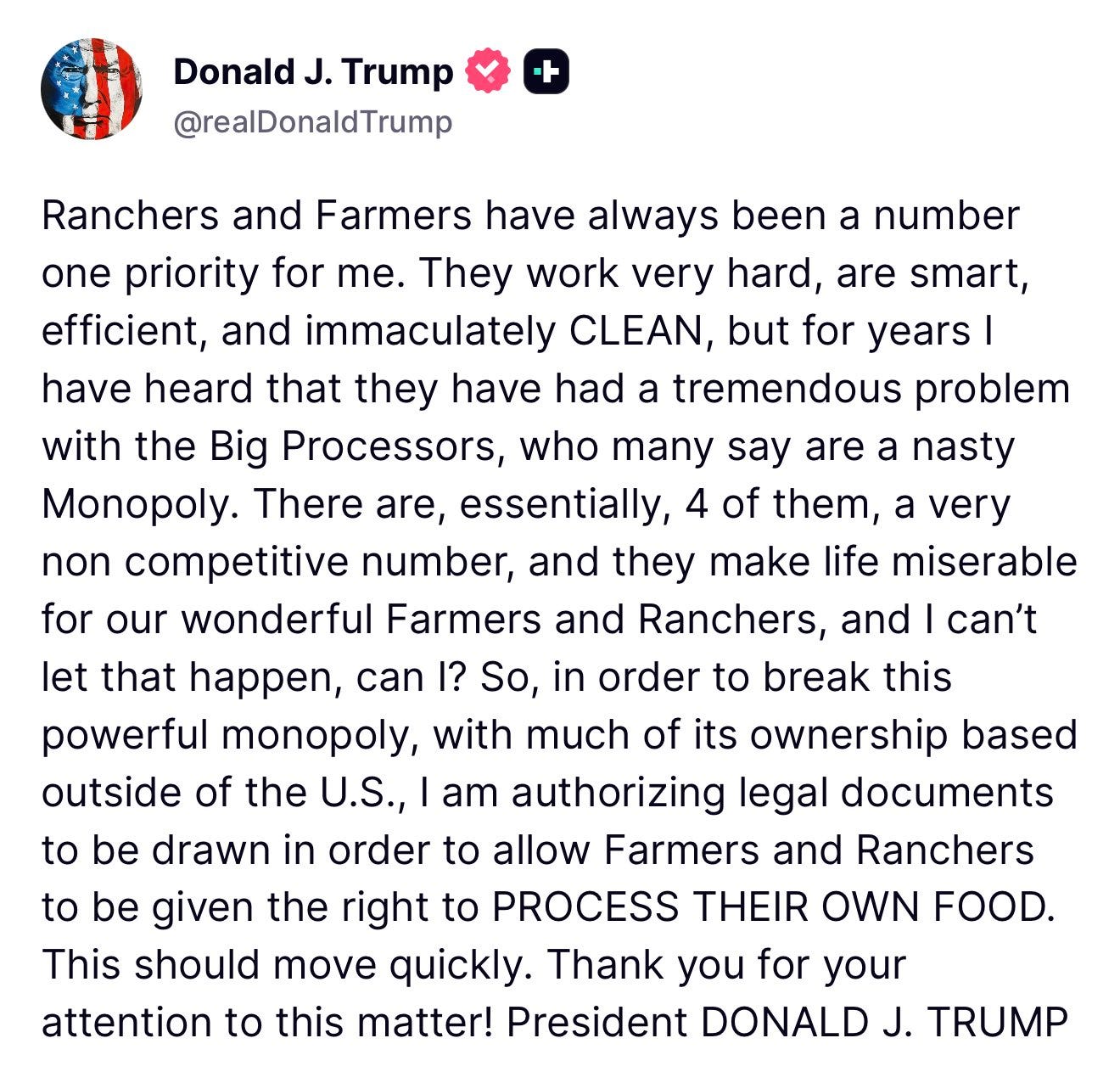
“I am authorizing legal documents to be drawn in order to allow farmers and ranchers to be given the right to process their own food. This should move quickly,” the president wrote in a Truth Social post.
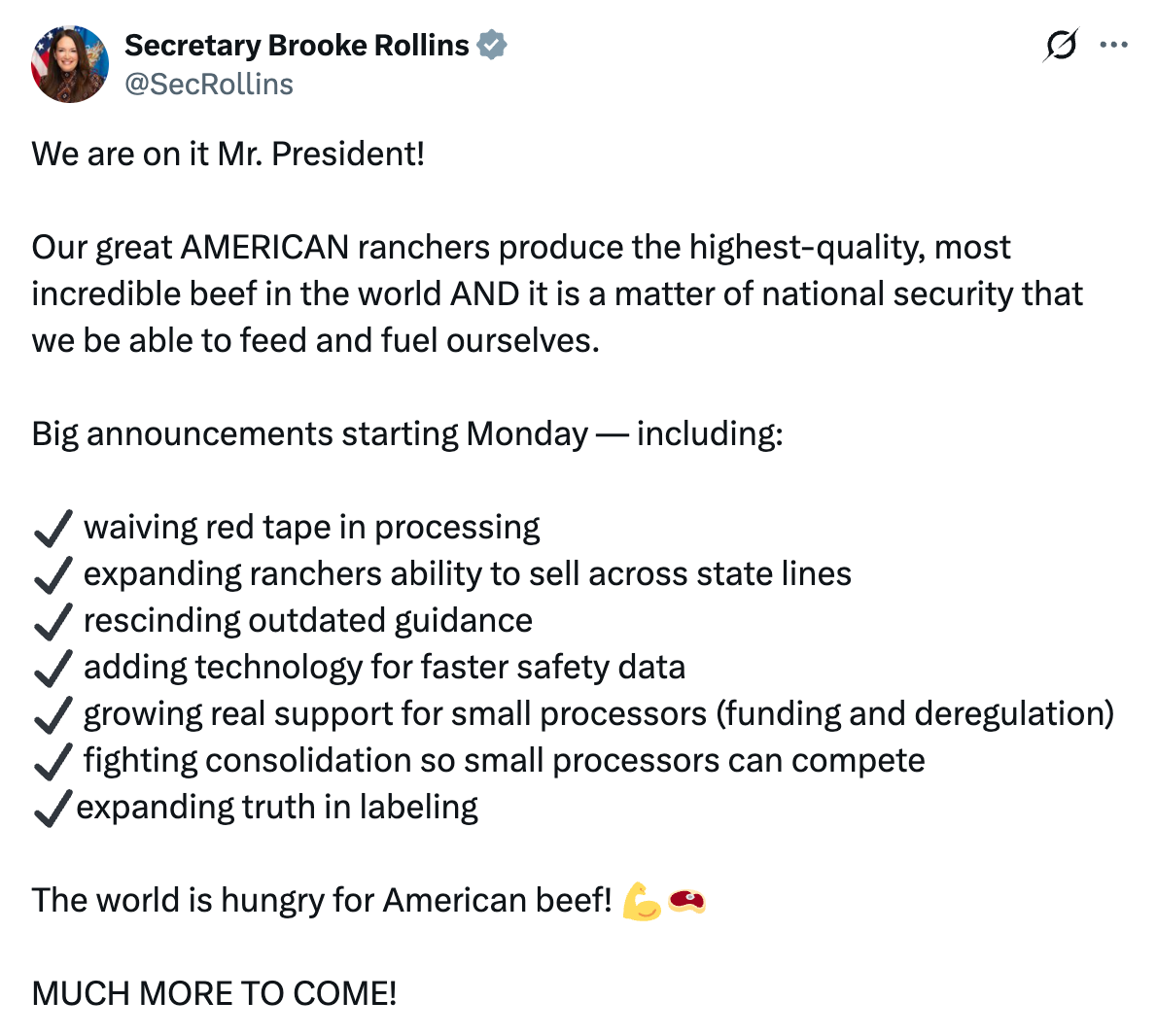
Secretary of Agriculture Brooke Rollins followed up, adding that “big announcements” for the ranching sector are on the way, starting Monday.
These announcements will include: waiving red tape in processing, expanding ranchers’ ability to sell across state lines, rescinding outdated guidance, adding technology for faster safety data, expanding support for small processors through funding and deregulation, fighting consolidation so small processors can compete, and expanding truth in labeling.
“The world is hungry for American beef,” said Rollins.
Trump’s announcement does not repeal any food safety laws. The administration has not yet released formal plans or elaborated on which regulations it believes it can change. It’s important to note that much of the federal meat inspection system is established by Congress, not USDA regulation.
The beef with processing laws
As it stands, ranchers can sell meat directly to consumers so long as the animal was harvested and cut under federal or state inspection.
Only federally-inspected meat can be sold across state lines; state-inspected meat generally is limited to intrastate commerce unless the establishment participates in the federal Cooperative Interstate Shipment (CIS) program.
There are 937 federally inspected cattle slaughter plants in the nation. Of the 29.25 million cattle slaughtered last year, almost half were slaughtered by 11 giant facilities. The 888 smallest plants slaughtered just 1.92 million, or 7.14% of the total.
Depending on location, these plants can get booked up quickly. Some processors report kill dates are booked 6-12 months out, creating a real bottleneck for producers.
Beef supply chain 101
Ranchers raise animals, largely on grass. There are different types of cattle enterprises; many ranches have more than one.
Cow-calf producers own the breeding herd and sell weaned calves at roughly 450-600 pounds, between six and eight months old, usually at auction or to a stocker operator. They might use bulls or artificial insemination (AI) for their breeding programs.
Some operations might run stocker programs; they buy weaned calves, raise them to a certain point, then sell, typically to a feedyard.
An increasing number of ranchers operate direct-to-consumer beef businesses, selling beef from animals slaughtered and processed at USDA-inspected facilities directly to their customers.
Slaughter happens at packing plants. Some of these also perform processing.
Processing plants then handle the harvested meat, including grinding, portioning, curing, smoking, sausage, and case-ready packaging. Many processing plants never see a live animal.
A facility can be authorized by the FSIS for slaughter-only, processing-only, or both.
When it comes to the Packers & Stockyards Act, a “packer” is anyone buying livestock for slaughter, or manufacturing or wholesaling meat products. The word can be used for a single plant, a company running many plants, and the industry as a whole.
What can the president do?
Most of the requirements governing commercial meat inspection are established by federal law, not agency rules. The president is therefore limited in what he can accomplish through executive order or unilateral USDA action.
The Federal Meat Inspection Act (FMIA) generally requires that all cattle, sheep, pigs, and goats slaughtered for commercial sale in interstate commerce must be federally inspected, with limited exemptions.
There are a few deregulatory actions the president and USDA could take. The administration could rescind or revise FSIS directives, which don’t require rulemaking. It could pursue rulemaking to change the inspection regulations themselves. It could waive overtime and holiday inspection fees, which small plants pay out of pocket.
There’s also the money. Since 2021, USDA has spent about $1 billion to expand and support small and mid-sized processors. The administration has significant discretion over how funds are spent.
Trump could also encourage more states to participate in the Cooperative Interstate Shipment (CIS) program. Eleven states are currently in the program—Georgia, Indiana, Iowa, Maine, Missouri, Montana, North Dakota, Ohio, South Dakota, Vermont, and Wisconsin—which allows participating state-inspected plants to ship eligible meat products across state lines.
He could also enforce laws already on the books. Advocates have long argued that antitrust laws, especially the Packers & Stockyards Act, have not been properly enforced against the highly concentrated beef packing industry. The four largest beef packers—JBS USA, Tyson Foods, Cargill, and National Beef—dominate the industry, controlling about 85% of all beef processing in the U.S.
What about MCOOL?
One thing the president cannot do is perhaps what producers want most. Mandatory country of origin labeling—or MCOOL—has been the biggest ask from ranchers for years. Congress repealed the beef and pork MCOOL requirement in 2015 due to pressure from the World Trade Organization (WTO). Reinstating mandatory labeling would require congressional action.
There’s some good news there. Earlier this month, the Senate Agriculture Committee voted 17-6 to include a provision requiring MCOOL in the 2026 Farm Bill. All Democrats voted for the amendment, along with six Republicans.
The larger Farm Bill remains stalled in committee due to pushback from Democrats on other issues, particularly SNAP provisions.
The USDA already did the next best thing. The voluntary “Product of USA” rule, which took effect January 1, 2026, now limits that claim to animals born, raised, slaughtered, and processed in the United States. Before that, meat could be labeled “Product of the USA” if it was minimally processed or packaged here, even if the animal originated elsewhere.
What about the PRIME Act?
Congressman Thomas Massie has a bill called the PRIME Act (Processing Revival and Intrastate Meat Exemption Act) that would amend the Federal Meat Inspection Act, creating a pathway for states to allow certain small, custom-exempt slaughter and processing operations to sell meat directly to consumers within the state.
The House-passed version of the 2026 Farm Bill includes a PRIME Act pilot program. The Farm Bill passed the House 224-200 in April but remains stalled in the Senate.
There is a way around the federal inspection system for ranchers, or consumers who buy animals. They can have their animal slaughtered and processed for their own use at a custom-exempt processor. The resulting cuts can’t be sold, and must be marked “Not for Sale.”
Internecine warfare
The National Cattlemen’s Beef Association (NCBA) opposes weakening federal meat inspection standards on food safety grounds.
The largest beef lobby in the nation, NCBA posted in opposition to the president’s announcement Friday—enraging producers.
“NCBA supports more competition, more opportunities for small & regional processors, and eliminating unnecessary regulations but weakening federal meat inspection & food safety standards isn’t the answer,” the statement read. “America’s cattle producers have earned consumer trust in U.S. beef over generations. That trust, and the gold standard food safety system behind it, shouldn’t be put at risk for a short-term political fix. Washington should focus on reducing legitimate regulatory burdens, lowering input costs, protecting the herd from foreign animal disease & expanding processing opportunities—not managing the cattle business.”
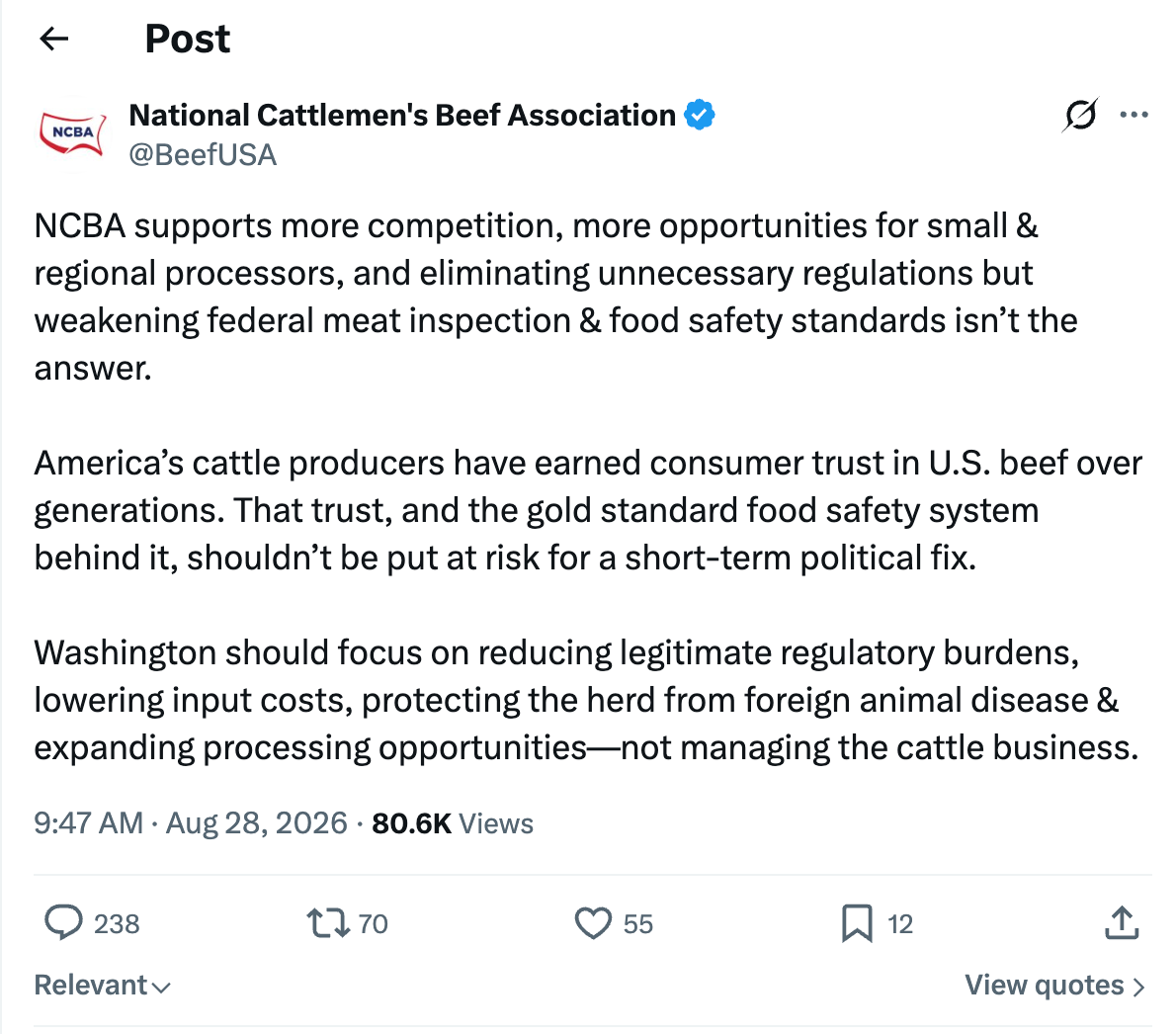
The post was “ratioed,” receiving more replies than likes.
“NCBA goes right back to work for corporate beef packers,” responded Jim Mundorf of the Lonesome Lands podcast.
“Yet again the NCBA backs the big four processors and sells out every family rancher in the country,” wrote an Oklahoma rancher.
Many independent producers want more local and regional processing capacity and less regulatory burden. Some have complained for years that NCBA’s policy positions track the interests of bigger players in the beef supply chain—not individual producers.
Past administrations have been largely closed off to appeals from independent producers, represented by smaller lobby groups like R-CALF USA. Trump’s second administration, and particularly Rollins, has broken with recent administrations by elevating small producers and their representatives—and making their concerns a much bigger part of the conversation.
The Big Ag lobby has no interest in this becoming reality. Regulation is primarily about suppressing competition by scaring people into dhimmitude. The only way to support local farming is to encourage local processing. Better quality food. Sustainable farming practices. Rescued communities.
What could Trump possy know about the beef industry? So my question is who in the Administration is actually behind these changes?