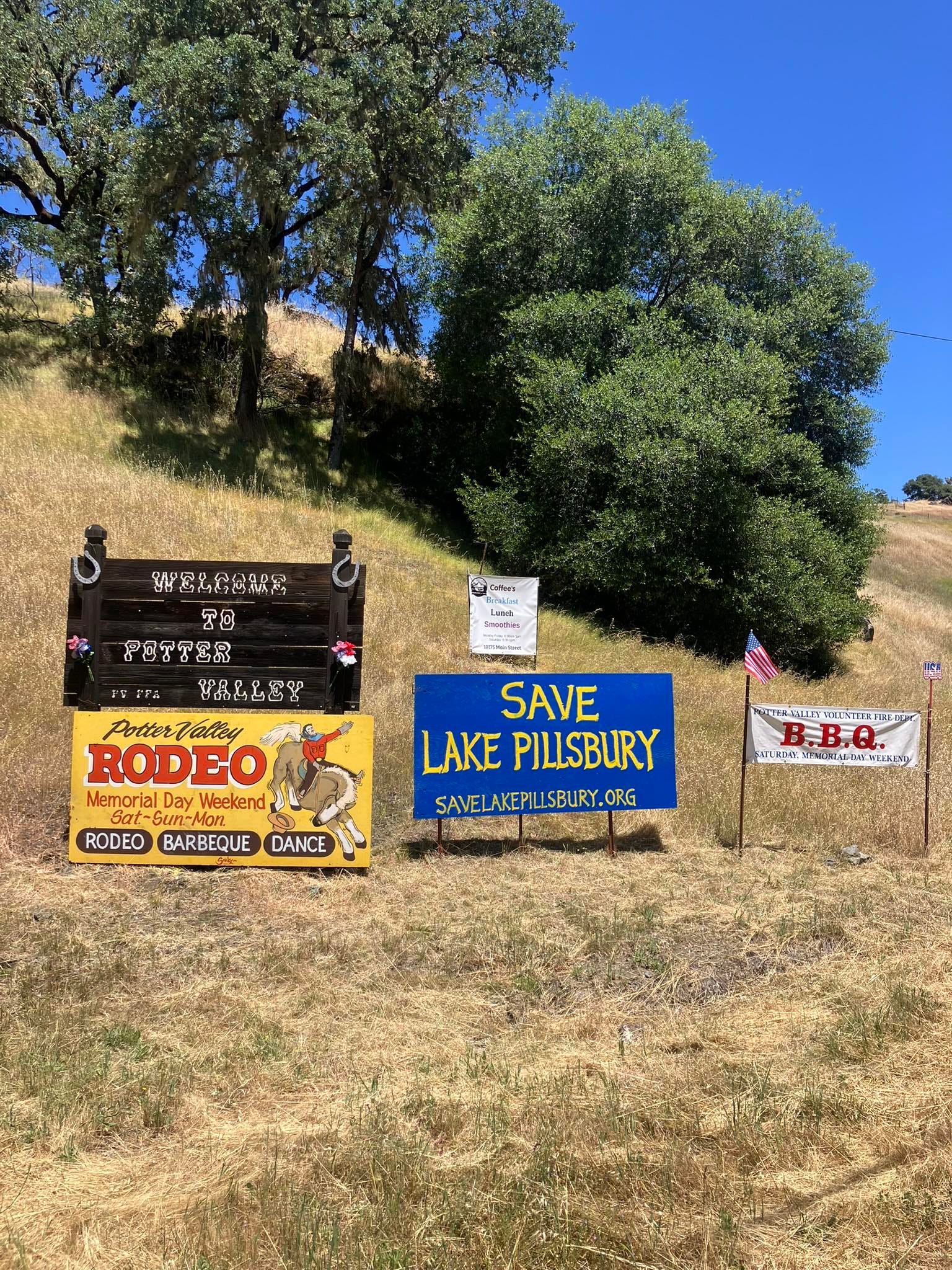
USDA Secretary Warns Against Potter Valley Dam Removal in Open Letter
In a letter to The Mendocino Voice, U.S. Agriculture Secretary Brooke Rollins says the proposed decommissioning would cut off water to rural communities and increase wildfire risk.

The Trump administration has taken a stand in the debate over proposed dam removals in Northern California, signaling federal opposition to Potter Valley Project decommissioning.
U.S. Agriculture Secretary Brooke Rollins authored a letter to the editor published in The Mendocino Voice this week, warning that removing the Scott and Cape Horn dams would jeopardize water supplies for farmers, ranchers, and rural communities, while increasing wildfire risk.
In her letter, Rollins cites a petition signed by over 920 stakeholders opposing the dam removal plan and pledges that the U.S. Department of Agriculture (USDA) will engage in the Federal Energy Regulatory Commission’s (FERC) review process to ensure compliance with federal law.
The Potter Valley Project diverts water from the Eel River to the Russian River watershed and serves an estimated 600,000-750,000 residents across Lake, Mendocino, Sonoma, Humboldt, and Marin counties. THe proposed surrender and decommissioning of the project has drawn growing opposition from agricultural producers and rural residents who say the plan would eliminate critical water access with no viable replacement.
Dam removal advocates, including environmental groups and some local politicians, argue the aging dams offer limited energy benefits and harm salmon recovery efforts.
Rollins’ letter is reprinted in full below, as published in The Mendocino Voice:
Dear Editor:
The heavy hand of California’s state government has gone unchecked for decades. The results? Burned-out cities and landscapes. Manmade water crises. A widening socioeconomic divide.
It breaks my heart that our nation’s largest food-producing state has chosen special interests and political ambition over its farmers, ranchers and rural communities time and time again.
The radical leadership of the state of California has treated the needs of fish as more important than the needs of the farmers and ranchers — the nation’s original conservationists.
Rural communities need water access to survive, yet California continues to ignore the needs of the very people who are the most connected to the land and water.
Because of this continued pressure from California, the Scott and Cape Horn dams have been proposed for decommissioning. The proposed surrender and decommissioning plan for the Potter Valley hydroelectric project will have a profoundly negative and irreversible impact on local farmers, ranchers and agricultural producers. These closures will effectively cut off any access to water, the lifeblood those producers rely on to feed the country and world.
These radical actions would also leave families vulnerable to more droughts and wildfire.
For over a hundred years, legacy farmers in Potter Valley have put this water to good use after first using it to generate electricity. This has been a symbiotic relationship between farmers, power generators and the environment.
Let’s put this into perspective. According to the latest agriculture census, the counties of Lake, Mendocino, Sonoma, Humboldt, and Marin have sold a combined total of over $1.4 billion of agricultural products. That’s well over $4.2 billion in extra economic activity due to agriculture. Farmers should be thanked for their productivity, not punished for it.
Make no mistake. If the decommissioning goes through, hundreds of legacy farms and this area’s rich agricultural heritage will be lost.
A government by the people should be for the people. California’s war on agriculture has gone unchecked to the detriment of us all.
Under the Trump administration, that war ends now.
The Federal Energy Regulatory Commission has issued two notices, Project Number 77-318 and 77-332, related to the decommissioning plan. Rest assured that the U.S. Department of Agriculture will actively engage to ensure this plan’s strict compliance with the law.
But we can’t do it alone.
Recently, I received a letter from over 920 concerned residents, all highlighting critical flaws in the proposed decommissioning plan. These include the elimination of water supply to local communities without viable alternatives; the negative impact that removal will have on water quality and drinking water safety for downstream communities, farms and ecosystems; and the diminished capacity for wildland firefighting in one of the most fire-prone regions of the country.
We need more of the 750,000 residents that are served by the Potter Valley Project and its dams to stand up for agriculture and for themselves. The current deadline to file comments has been extended and now closes on Dec. 19 at 2:00 p.m. Pacific Time.
I want you to know you are not alone in this righteous fight, which strikes at the very heart of our freedoms. The Trump administration is listening, and we are committed to working across the government to protect Potter Valley’s water supply and the communities and prime farmland that it serves.
Brooke Rollins
Secretary of the U.S. Department of Agriculture


Beyond on the agriculture sector and people just needing water to survive the loss of even one megawatt of renewable hydroelectricity, which on am installed capacity basis is the lowest cost electric power than. An be produced is a disgrace when it is needlessly removed and replaced by high cost and heavily subsidized wind, solar and battery generation. The California Independent System Operator needs to be brought into the picture as well as FERC, the ISO see every second of the day the limited nature of and the larger consequences of the renewable energy grift on the California rate and tax payer who are oddly enough one and same. Secretary Rollins is correct; everyone in the areas that will be impacted by the dam removal and the impact on water rights managed by a few to the detriment of the many, ought to be outraged and up in arms figuretively. The greater good of the 600,000 verses that of 5,000 ought to be clear enough case on its own merits.
Good luck in the fight as it is fight worth fighting. Save yourselves, nobody is coming to save you otherwise.
976362
Hauling migrating fish around the dam where they congregate when stopped would be a quick, easy, and very inexpensive solution. Those objecting seem very likely to just be looking to profit from building fish ladders or the destruction of this wonderful resource. Fry going downstream would have a great place to grow up without being stuck in drying pools.