
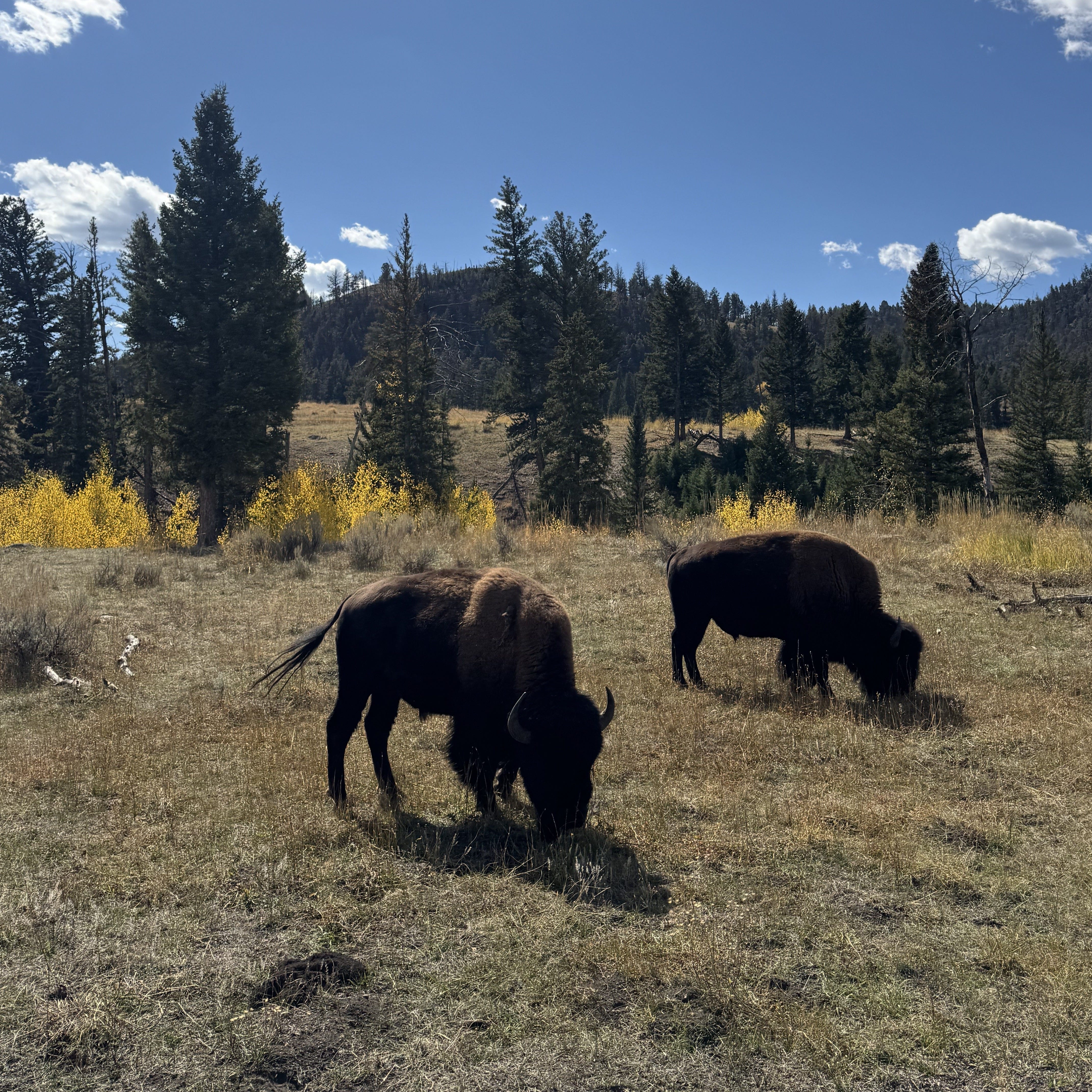
Why Montana ranchers are applauding the end of American Prairie's bison grazing permits
This month, BLM ruled that federal grazing permits are meant for traditional livestock production—not conservation.
Earlier this month, the Bureau of Land Management (BLM) revoked seven bison grazing leases in Montana held by the conservation nonprofit American Prairie. This decision marks the latest chapter in what has become a touchstone in the conflict between ranchers and environmentalists.
At stake, ranchers say, is whether 100 year-old grazing laws will continue to protect traditional production agriculture, or be reinterpreted to allow green groups to compete with ranchers for limited public land access.
American Prairie seeks to assemble 3.2 million-acre reserve
American Prairie runs an estimated 900 bison on about 63,000 acres of federal land in Montana. As a nonprofit dedicated to a rewilding vision of conservation, American Prairie views bison as a keystone species of the Northern Great Plains critical for restoring native prairie ecology. It does not consider cattle grazing to provide these restorative benefits, though cattle and bison are the same species. American Prairie’s free-roaming herds are managed to mimic wild behavior and are not primarily raised for meat.
The organization’s board and donor list is studded with powerful names like Susan Packard Orr, daughter of the Hewlett-Packard cofounder, and members of the Mars family, heirs to the Mars Candy fortune. American Prairie seeks to assemble 3.2 million contiguous acres of shortgrass prairie. Its stated goal is to buy private properties and link them with adjacent public lands to create one of the largest nature reserves in the world.
As of 2024, American Prairie reported approximately $44.7 million in total revenue with assets totaling $206.8 million. A large portion of its net worth is held in land.
Who gets to use America’s land?
The Taylor Grazing Act of 1934 established livestock grazing for production agriculture as a legitimate use of public land, alongside other recognized uses such as wildlife habitat, recreation, and mining. The BLM has about 155 million acres available for grazing leases—60% of its total land portfolio.
Ranchers argue that expanding the federal definition of grazing to include grazing for conservation or ecosystem rehabilitation purposes would pit powerful environmental organizations against traditional producers. Because many ranchers feel that government agencies have become ideological in recent decades, they say allowing green groups to compete for grazing permits could ultimately force production agriculture off public land.
The debate goes to the heart of public land access. Expanding the definition of land use to include “non-use” would undermine the original vision of public land management, founded on a framework of citizen stewardship of natural resources.
Reversing Biden-era permit approval
In 2022, BLM approved a new plan from American Prairie that allowed bison grazing for environmental rehabilitation.
Industry groups like the Montana Stockgrowers Association pushed back, arguing grazing permits were designed for food production. The BLM was setting a concerning precedent, they warned, because individual producers would not be able to compete with rich and politically influential NGOs—particularly given what they view as the trending ideological bent of many federal agencies.
In 2025, Doug Burgum—Trump’s newly appointed head of the Department of the Interior (DOI)—directed BLM to reassess its decision to grant American Prairie grazing permits. This month’s revocation is the outcome of that review.
Montana Governor Greg Gianforte praised the BLM’s move as a victory for ranchers and food production.
“Today’s decision by BLM is a win for Montana’s ranchers, our agricultural producers, and the rule of law,” Gianforte said in a statement.
Montana’s attorney general, Austin Knudsen, also praised the decision.
“Canceling the American Prairie Reserve’s bison grazing permit will help to protect the livestock industry and ranching communities in Northeastern Montana from the elitists trying to push them out,” he said.
American Prairie CEO Alison Fox called the move “unfair, deeply disappointing, disruptive, and inconsistent with long‑standing public‑lands grazing practices in Montana.”
She added that her organization, which has been authorized to graze bison on BLM land since 2005, will be considering all their legal options including appeal.
Burgum has steered DOI back to its original multiple-use mandate for public lands. This is the idea that federal lands should benefit citizens through diverse utilization through food production, hunting, recreation, mineral development, timber harvesting, energy, and other uses, not conservation alone.
“This land was put away for the benefit and use and enjoyment of the American people, and not every acre of federal land is a national park or a wilderness area,” he told journalists. “Some of those areas we have to absolutely protect, but the rest of it is America’s balance sheet.”
DOI manages 500 million acres of public land, 700 million acres of sub-surface minerals, and 1.7 billion acres offshore. Burgum has said he intends to steward these national assets to deliver a “return for the American people.” Last year, he halted implementation of the 2024 Public Lands Rule, which would have designated conservation as a land use.
Montana considers bison “domestic livestock”
American Prairie may have chosen Montana as the location for its prairie restoration project in part because state law classifies bison as “domestic livestock.”
While the organization manages its bison to simulate wild herds, its FAQ states that the group complies with all state regulations for domestic animals, including disease testing.
In her 24-page decision letter sent January 16, Sonya Germann, state director for the BLM Montana/Dakotas office, stated that American Prairie’s bison herds do not meet the federal definition of livestock grazing.
“There are multiple times wherein by the applicant’s own admissions it is clear that these are not managed for production-oriented purposes and so do not fall within the meaning of the terms livestock and domestic as those terms are used in the applicable statutory authorities,” Germann said. “Reissuing cattle-only permits on allotments where bison or a combination of cattle and/or bison were previously authorized...ensures that the BLM is acting within the limits of its statutory authority.”


Let’s hope this is just the beginning to restoring grazing rights back to the people who feed this country.
Good news… now maybe the Trump Administration can look at the Dairy farm fiasco at Pt Reyes National Seashore.