
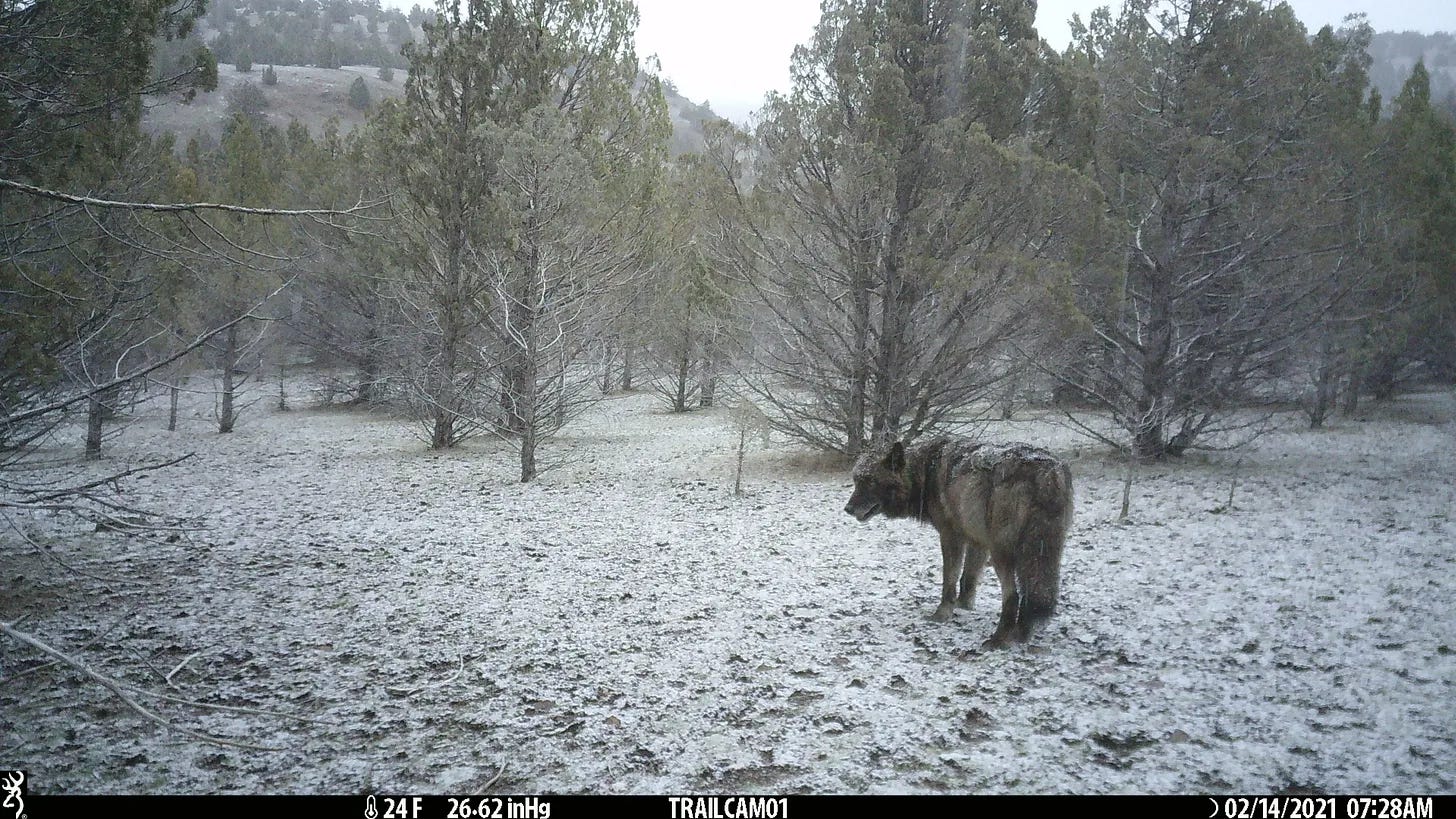
House votes to remove gray wolves from Endangered Species List
H.R. 845 now heads to the Senate.
Today, the U.S. House passed a bill delisting Northern and Rocky Mountain gray wolves. Delisting gray wolves from the federal Endangered Species Act (ESA) would enable individual states to manage wolf populations as they see fit.
Titled the Pet and Livestock Protection Act, H.R. 845 was introduced by two Republicans—Rep. Tom Tiffany (R-Wisconsin) and Rep. Lauren Boebert (R-Colorado)—but passed with some crossover Democrat support in a 211-204 vote.
36 members of Congress cosponsored the bill.
“The science has been clear for nearly two decades: the gray wolf is a fully recovered species,” said House Natural Resources Committee Chairman Bruce Westerman.
Ranchers across Western states have faced increased livestock depredations from gray wolves over recent years.
Activist judge vacated Trump 2020 delisting
In 2020, during Trump’s first term, the Department of the Interior (DOI) and U.S. Fish and Wildlife Service delisted gray wolves in the lower 48 states, with the exception of Mexican gray wolves.
The rule was then vacated by a California judge in 2022.
Today’s bill would require DOI Secretary Doug Burgum to reinstate the 2020 rule and includes protections to prevent its being overturned by judicial review, so activist judges wouldn’t be able to again bar states from managing exploding wolf populations.
There are between than 6000-7000 gray wolves in the contiguous U.S., making this species the most dramatic ESA “success story” since the bill was passed.
“When federal protections were first established for gray wolves in the Great Lakes region, populations were only in the hundreds,” said Tiffany. “Today, there are well over 4,000 wolves across Michigan, Minnesota, and Wisconsin. Despite this recovery, activist judges continue to ignore the science, leaving livestock and pets to be slaughtered and rural communities vulnerable.”
Ranching, hunting, conservation groups celebrate vote
Conservation groups, including ranching and hunting groups, celebrated the bill’s passage through the House.
“Gray wolves have long since recovered and remain listed only because of political pressure from activist groups,” said Public Lands Council President Tim Canterbury. “Ranchers and rural communities across the West face the daily consequences of unchecked wolf populations, which threaten both livestock and pets. Returning management authority to the states ensures that decisions are made closer to those directly impacted on the ground.”
Mexican gray wolves were excluded from both the 2020 delisting and the current version. Courts have found that this species is distinct and therefore insulated from broader delisting efforts, though ranchers in Arizona and New Mexico say they face similar depredations.
At a recent House Natural Resources Subcommittee hearing on delisting Mexican gray wolves, rancher Tom Paterson argued that recovery thresholds have been met.
“Rural communities are currently facing the grave consequences from an apex predator that should be delisted,” said Paterson, who serves as president-elect of the New Mexico Cattle Growers’ Association. “Mexican wolves have also killed my cattle, causing severe economic stress to our operation and to other producers.”
H.R. 845 now heads to the Senate, where a vote has yet to be scheduled.
Read More
Thrown to the wolves: California ranchers under siege
Last year, the state of California ran out of money to reimburse ranchers for livestock killed by wolves.
First Wolves Released in Colorado
Gray wolves were released in Colorado this week, beginning the implementation of a controversial plan to introduce up to 50 gray wolves into the state. It was recently revealed that three of the wolves, which were transported from Oregon, came from packs that have killed livestock.
California officials may ban coyote killing. North State sheriffs say predator attacks are already at crisis level.
The California Fish and Game Commission’s Wildlife Resources Committee (WRC) is considering a new rule that would ban killing coyotes without direct evidence of damage.


Wolf reintroduction was huge and beautiful. Maybe decades later measured culling is needed. We just don't want to wipe them out again and everybody the poorer.
https://youtube.com/watch?v=W88Sact1kws
Wolf gotta eat too.