



In a historic meeting with Forest Service employees across the nation, Agriculture Secretary Brooke Rollins emphasized the Trump administration’s rancher-first agenda.
“Today, I joined over 500 Forest Service employees to discuss our past, current, and future efforts to execute the Grazing Action Plan, and the role the Forest Service plays in rebuilding the American cattle and sheep herds,” Rollins wrote in a post on X last week.
With the American cattle herd at a 75-year low, the Trump administration is prioritizing grazing on National Forest land. The USDA released a Grazing Directive memo in June, instructing the Forest Service—which falls under the USDA—to offer vacant and closed grazing allotments to ranchers, and to ensure “no net loss” of livestock grazing on its allotment acres.
The plan also set a measurable goal: Restore a minimum 500,000 head months on National Forest land by 2028, partially reversing the nearly 1 million lost between 1966 and 2022. A head month is one cow-calf pair, or five sheep, grazing for one month.
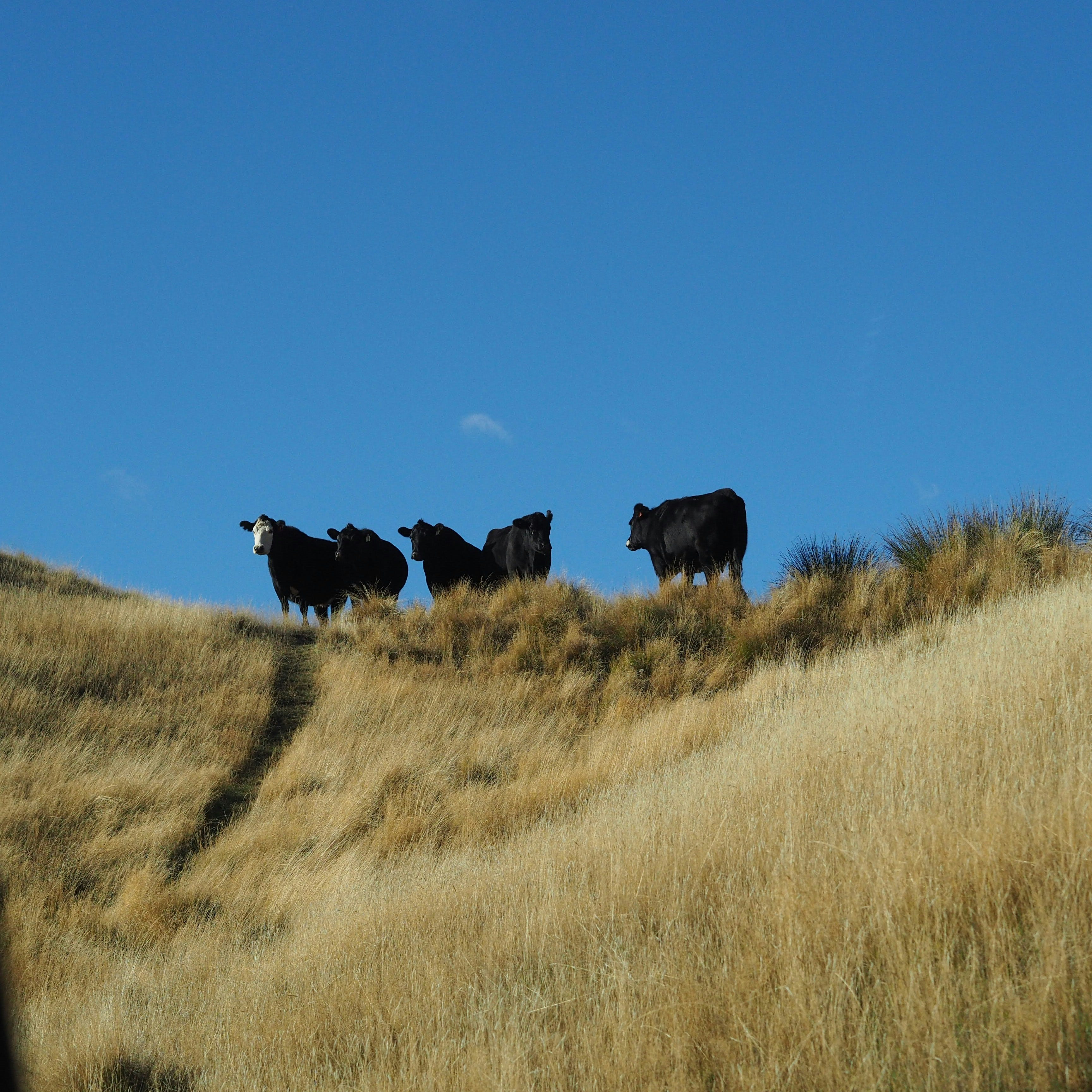
The virtual meeting, held last Friday, included a status update. Rollins told Forest Service employees they were already more than halfway to their goal: 278,000 head months have been restored so far in 2026. She directed workers to begin processing applications right away for 165 vacant grazing allotments, with the goal of issuing permits by January 1, and announced an additional $8 million funding allowance toward grazing efforts.
Legal challenges from environmental groups
While ranching advocates celebrate the support for public land grazing, some environmental groups are not happy.
In a lengthy post, Western Watersheds Project described Rollins’ priorities as “a new course for exploiting our national forests” and evidence that the Trump administration “intends to block the recovery of native wildlife to their original abundance.”
And in August, another green group filed a federal lawsuit in Portland, claiming the federal government skipped required wildlife reviews. The Center for Biological Diversity says Rollins and Interior Secretary Doug Burgum violated the Endangered Species Act by not consulting the Fish and Wildlife Service or the National Marine Fisheries Service before expanding grazing. That case is pending.
“Log it, graze it, or watch it burn”
The Trump administration has advanced several initiatives to lower consumer prices—particularly beef prices, which remain high after a combination of factors including drought and disease concerns led to a constricted cattle herd. Ground beef is up 7.4% over the previous year, as of September 2026.
The Forest Service manages about 193 million acres, roughly 93 million of which are available for livestock grazing across 8,440 allotments. More than 1,100 of those allotments were classified as “vacant” or “vacant-unavailable,” according to an April 2026 analysis of Forest Service daya.
Growing the domestic cattle herd would presumably help lower prices at the grocery store. But grazing advocates argue unmanaged grasslands pose a fire hazard, and that grazing is beneficial to ecosystem health and plant and animal biodiversity.
In 2025, approximately 6,937 fires occurred on Forest Service land, burning 1,142,933 acres. A 2010 study in Rangeland Ecology & Management compared eight sagebrush sites that had been ungrazed since 1936 with nearby grazed areas, and found twice the amount of fine fuels—the grasses and litter that carry fire—on the ungrazed plots. A follow-up study published in the International Journal of Wildland Fire in 2015 showed that, compared with winter-grazed plots, fires on ungrazed plots saw 2.4 times more land burned, spread 3.2 times faster, and produced flames about three times taller.
Nate Chisholm, a grazing ecologist currently studying the impact of megafauna on savannas in Kenya, has examined how livestock impact biodiversity. Over a six-year period monitoring plots in Northern California, he measured a 101% increase in plant biodiversity, and a 61% increase in native plant cover.
“The domestic animals will help you create natural conditions better than the wild animals on the vast, vast majority of landscapes because you can manage them,” he says.
Forest Service reform a Rollins priority
Rollins has made changing how the Forest Service treats ranchers and grazing permittees a priority.
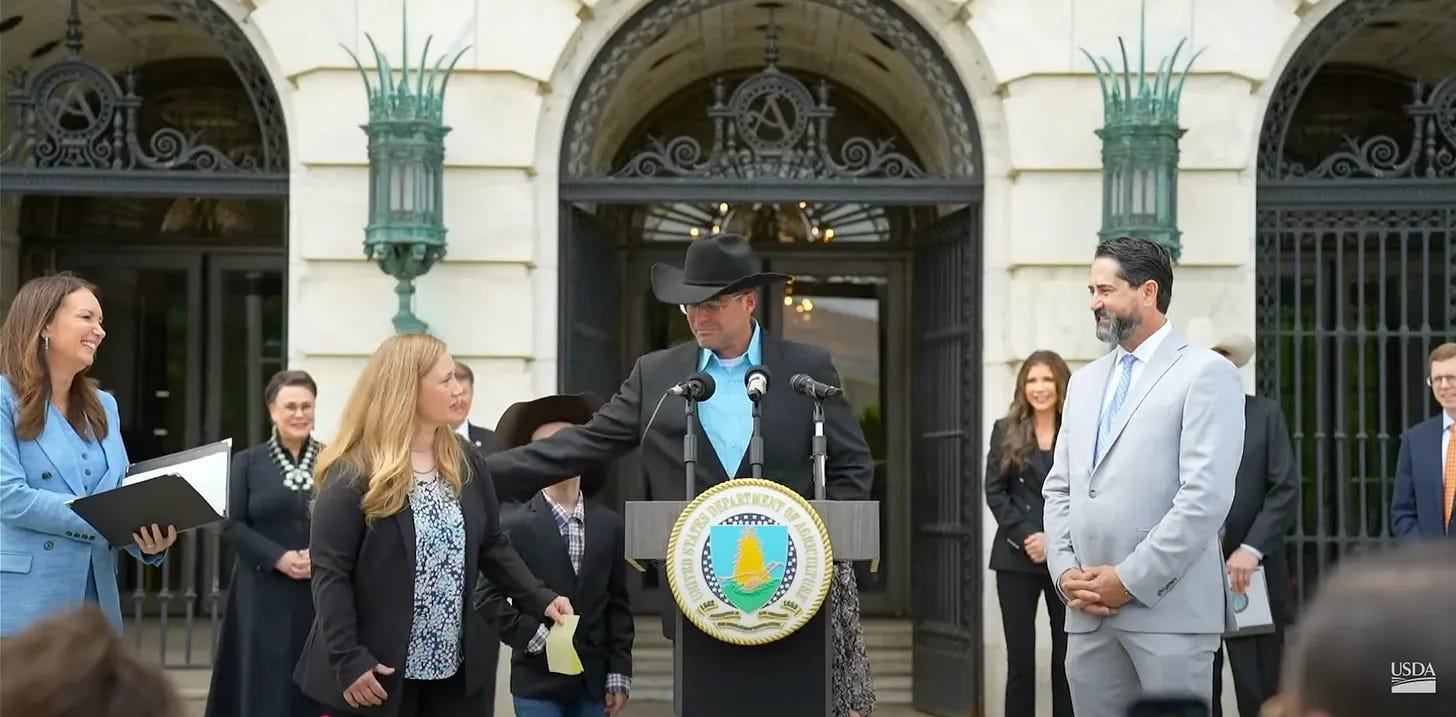
In April 2025, three months into her tenure, she stood with Charles and Heather Maude outside USDA headquarters in Washington, D.C. and announced that federal criminal charges against the young South Dakota ranching couple had been dropped. The Forest Service had indicted each of them in 2024 on charges of theft of government property, over a fence along the Buffalo Gap National Grassland that had stood since pre-1950. Both Charles and Heather each faced up to 10 years in prison.
“Just imagine a government that would be willing to de facto orphan American children over a mere dispute of 25 acres of land,” Rollins said at the event.
The June Grazing Directive put her priority into policy. It requires Forest Service employees to treat permittees respectfully, acknowledge their correspondence within three business days, favor guidance over enforcement where appropriate, and “avoid actions that could appear retaliatory.”
“No more activist lawfare and bureaucratic delays locking up allotments,” Rollins said. “Ranchers are the solution, not the problem.”
Read More:
Rollins Just Ordered Major Reforms to How the Forest Service Treats Ranchers, a Year After the Maude Case

Today, Secretary of Agriculture Brooke Rollins directed the Forest Service to change how it interacts with ranchers. She made it clear: Grazing on public land is a priority for the Trump Administration.Support independent jou…
Officials gather in D.C. to announce criminal charges against Maude family dropped

Lawmakers and officials stood with the Maude family Wednesday outside the USDA building in D.C. to announce criminal charges against the young ranchers dropped.
South Dakota ranching couple indicted by Forest Service for fence in place since 1950

CAPUTA, SD – A South Dakota ranching couple is facing 10 years in prison over a fence dispute.
God bless and protect our ranchers and Rollins! YES -- ranchers and farmers ARE the solution!!